Built-In Deck Benches, Planters, and Privacy Walls: When Custom Carpentry Pays for Itself in Usable Square Footage
Most decks are built with square footage in mind but finished without a plan for how that space actually gets used. You end up with a flat platform, a table in the center, a few chairs pushed against the rail, and a vague sense that something is missing. The outdoor space looks complete on paper but feels unresolved in practice. Furniture migrates, planters tip over in wind, and the edges of the deck sit unused because there is nothing anchoring them. What starts as a quality build slowly becomes a storage zone for things that have no other place to go.
Built-in carpentry changes the relationship between a deck and the people who use it. Benches integrated into the frame, planters that double as visual screens, and privacy walls that define the outer boundary of the space do something that freestanding furniture cannot: they turn raw square footage into organized, functional rooms. This article breaks down how built-in deck features are engineered, why the framing decisions made during the original build determine what is possible later, and what separates a carpentry detail that holds for twenty years from one that starts failing within three.
How Built-Ins Are Actually Framed Into the Deck Structure
Built-in benches, planters, and privacy walls are not additions bolted to the surface of a finished deck. They are structural elements that must be accounted for in the original framing plan.
Bench Framing and Load Distribution
A built-in bench carries repeated concentrated load, meaning the same spots take weight every time someone sits down. A properly framed bench integrates its support posts directly into the deck's rim joist or blocking system rather than relying on the decking surface for structural transfer. In most residential applications, bench supports are notched and bolted through doubled rim joists using structural lag screws at a minimum of 3 inches of penetration into solid framing members.
Skipping this integration and fastening bench supports only to decking boards creates a lever effect. The boards flex under load, the fasteners work loose over two to three seasons, and the bench develops lateral movement that tightens every time someone stands up awkwardly and loosens again under normal sitting weight. By year five, the connection is compromised and the bench reads as unsafe even if it has not yet failed.
Planter Box Drainage and Moisture Management
Built-in planter boxes introduce a moisture management problem that most people do not anticipate. Soil holds water, and water held against a wood framing member without a proper drainage plane will begin to degrade the structural material within two growing seasons.
A correctly built deck planter uses a liner system that separates the soil from the wood entirely. HDPE liners or sheet metal pans are sloped to a drain point, and the drain is directed away from the deck frame through a dedicated weep port. The framing surrounding the planter is built from pressure-treated lumber rated for ground contact, typically UC4A or UC4B depending on soil moisture exposure, even if the rest of the deck uses a lighter treatment rating. Without this distinction in material specification, the planter box becomes the fastest-degrading element on the entire structure.
Privacy Walls and the Engineering Behind Them
A privacy wall on a deck is a vertical structure exposed to wind load, and wind load on a flat panel surface is significant. IRC Section R507 requires that attached decks be designed to resist both vertical and lateral loads, and any vertical structure added to the deck surface introduces additional wind load that the underlying frame must absorb. Privacy wall posts that extend well above the railing line are particularly vulnerable to overturning under sustained wind pressure, and the post-to-frame connection must be selected and installed to resist that rotational force rather than just vertical pullout.
- Post Base Selection and Lateral Resistance:- Privacy wall posts are only as stable as their base connections. Surface-mounted post bases, the kind fastened only to decking, are not rated for the lateral loads a privacy wall generates. Posts for permanent privacy walls must be through-bolted to rim joists or cantilevered down to a footing connection depending on the wall height and the exposure of the site.
In wind-exposed locations, which describes most elevated decks with unobstructed yard exposures, engineers specify moment connections at the post base rather than simple shear connections. A moment connection resists rotation under load rather than just vertical pullout. The difference in hardware and fastener count between these two connection types is small, but the difference in wall stability over ten years of seasonal wind loading is the difference between a wall that stays plumb and one that tilts and pulls its base fasteners. - Infill Material Selection for Climate Exposure:- The panel or infill material used in a privacy wall determines both the maintenance demand and the structural behavior of the wall over time. Cedar tongue-and-groove boards, composite pickets, cable panels, and metal screens all behave differently under thermal cycling and moisture exposure in the Midwest climate that Evansville, Indiana, experiences.
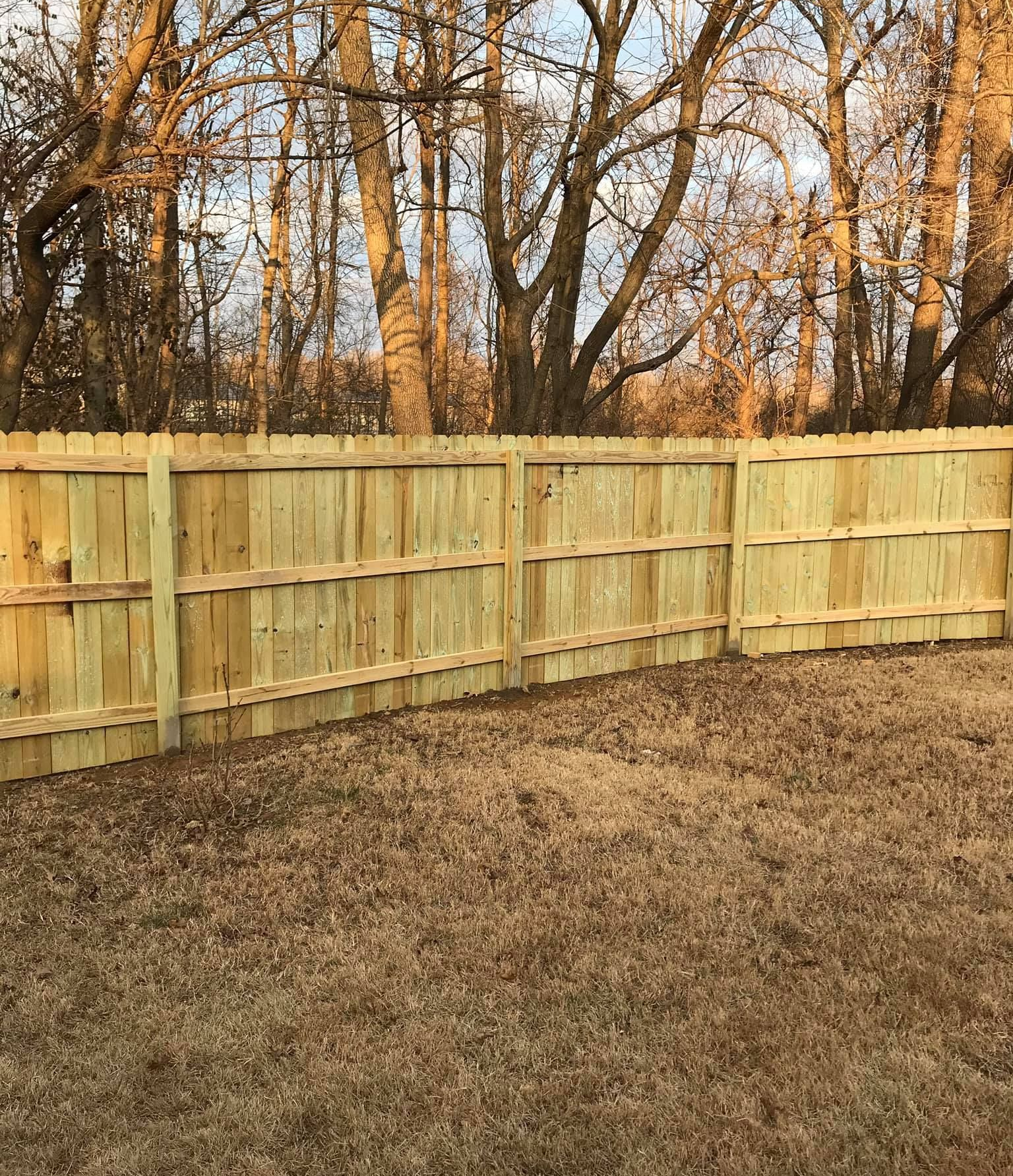
Cedar and composite materials expand and contract seasonally. Tight-fitting installations with no relief gap between boards will buckle during summer heat. Proper installation accounts for a 1/8-inch gap minimum between vertical boards, allowing seasonal movement without panel distortion. This is a detail that gets skipped when contractors price the job by the linear foot without building in time for careful spacing during installation.
TIP: Run your hand along the inside face of a built-in privacy wall from top to bottom. If the boards bow inward or outward in the middle and the wall was installed within the last few years, the gaps between boards were likely cut too tight during installation and the panels are buckling under seasonal wood movement.
Why Regional Conditions in Evansville Shape These Decisions
Evansville sits in a climate zone that cycles through significant freeze-thaw stress, hot humid summers, and episodic heavy rainfall. Each of these conditions puts specific pressure on built-in carpentry that would be less pronounced in a drier or more temperate climate.
Freeze-Thaw Effects on Fasteners and Connections
Steel fasteners in wood connections expand and contract at a different rate than the wood surrounding them. Over repeated freeze-thaw cycles, this differential movement slowly enlarges the hole around the fastener and reduces clamping force. This process, called fastener relaxation, is one of the primary reasons built-in bench connections loosen over time without any single loading event causing the failure.
Using hot-dipped galvanized or stainless steel structural screws and bolts rather than standard zinc-plated hardware reduces the rate of corrosion-driven relaxation. It also matters what species the fastener is going into. ACQ pressure-treated lumber, which is standard in exterior applications, is corrosive to standard zinc-plated hardware, and using incompatible fasteners in pressure-treated framing violates the treatment manufacturer's installation requirements and voids the lumber warranty.
Drainage Patterns and Deck Slope
Built-in features alter the drainage pattern of a deck surface. A bench running the full length of one side creates a shadow zone where water pools if the deck slope underneath it does not direct water away from the house. Standard deck slope specifications call for a minimum of 1/8-inch drop per linear foot of deck surface, but this baseline is set for open, unobstructed surfaces.
When a bench or planter box interrupts the surface, water is redirected. A professional accounts for this during layout by verifying that the framing slope beneath and around built-in elements still channels water toward the outer edge of the deck rather than back toward the ledger. Getting this wrong results in standing water under a bench, accelerated wood degradation in the shadow zone, and eventual moisture infiltration at the ledger connection where the deck meets the house.
WARNING: If you notice discoloration or soft spots in the decking boards directly beneath a built-in bench, particularly near the ledger end of the deck, do not treat this as surface weathering. Soft spots under a bench shadow zone indicate moisture retention and potential frame decay that requires immediate inspection of the framing members below the surface.
Dedicated Craftsmen Serving Evansville With Structural Precision
Built-in deck features are not decorative decisions. They are structural decisions made during framing that determine how functional, durable, and safe a deck will be across decades of use. The bench that feels solid after installation and the one that wobbles by year three were separated by a few fastener specifications and a framing detail that took twenty minutes to do correctly. Planter boxes that hold their shape and planters that rot the surrounding frame were separated by a liner system and a material specification for the framing lumber around them. Privacy walls that stay plumb through Indiana winters and walls that tilt were separated by a post base connection rated for lateral load. These details are not visible after the build is complete, which is exactly why the contractor you hire before the project starts matters more than anything you can inspect after the work is done.
At Castle Top Classic Outdoor Living, we have been building custom decks and integrated outdoor living structures across Evansville, Indiana, for 24
years. Our approach to built-in carpentry starts at the framing stage, not after the deck surface is laid, because every bench, planter, and privacy wall we build is engineered into the structure rather than attached to the surface. We understand how Evansville's climate cycles affect wood movement, fastener performance, and drainage behavior, and we specify materials and connections accordingly on every project. We serve homeowners throughout the region and we bring the same level of structural attention to a built-in bench on a small backyard deck as we do to a full outdoor room with privacy walls and integrated planters. When you invest in built-in features, you are investing in the long-term usability of the space, and that investment holds its value only when the underlying carpentry is built to last. Our work across the Tri-State region reflects what years of hands-on experience with this climate, this soil, and these structures actually produces.