Composite Deck Fading or Staining? What Holds Up and What Doesn't
Why Regional Conditions in Evansville Shape These Decisions
Bench Framing and Load Distribution
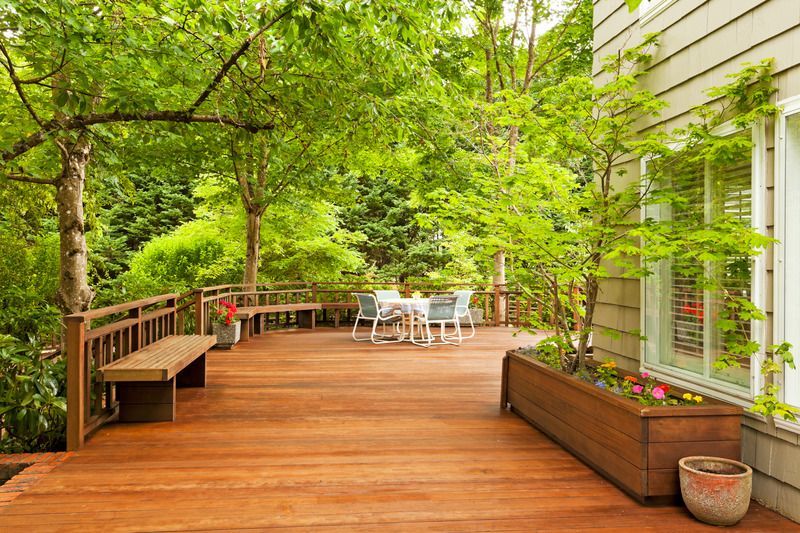
A built-in bench carries repeated concentrated load, meaning the same spots take weight every time someone sits down. A properly framed bench integrates its support posts directly into the deck's rim joist or blocking system rather than relying on the decking surface for structural transfer. In most residential applications, bench supports are notched and bolted through doubled rim joists using structural lag screws at a minimum of 3 inches of penetration into solid framing members.
Skipping this integration and fastening bench supports only to decking boards creates a lever effect. The boards flex under load, the fasteners work loose over two to three seasons, and the bench develops lateral movement that tightens every time someone stands up awkwardly and loosens again under normal sitting weight. By year five, the connection is compromised and the bench reads as unsafe even if it has not yet failed.
WARNING: If you notice discoloration or soft spots in the decking boards directly beneath a built-in bench, particularly near the ledger end of the deck, do not treat this as surface weathering. Soft spots under a bench shadow zone indicate moisture retention and potential frame decay that requires immediate inspection of the framing members below the surface.
Built-in planter boxes introduce a moisture management problem that most people do not anticipate. Soil holds water, and water held against a wood framing member without a proper drainage plane will begin to degrade the structural material within two growing seasons.
A correctly built deck planter uses a liner system that separates the soil from the wood entirely. HDPE liners or sheet metal pans are sloped to a drain point, and the drain is directed away from the deck frame through a dedicated weep port. The framing surrounding the planter is built from pressure-treated lumber rated for ground contact, typically UC4A or UC4B depending on soil moisture exposure, even if the rest of the deck uses a lighter treatment rating. Without this distinction in material specification, the planter box becomes the fastest-degrading element on the entire structure.
Planter Box Drainage and Moisture Management
Quick Answer: Some color change in composite decking is normal. Almost every board settles into its true color during the first several months outside, and after that, a well-made capped board holds its color for years. What you shouldn't have to live with is deep staining from tannins, hard water, rust, or mildew that won't wash off, or a board that keeps fading long after that first season. The difference usually comes down to whether the board is capped or uncapped, how it was cleaned and maintained, and how much quality went into the composite in the first place.
Why Regional Conditions in Evansville Shape These Decisions
Bench Framing and Load Distribution
A built-in bench carries repeated concentrated load, meaning the same spots take weight every time someone sits down. A properly framed bench integrates its support posts directly into the deck's rim joist or blocking system rather than relying on the decking surface for structural transfer. In most residential applications, bench supports are notched and bolted through doubled rim joists using structural lag screws at a minimum of 3 inches of penetration into solid framing members.
Skipping this integration and fastening bench supports only to decking boards creates a lever effect. The boards flex under load, the fasteners work loose over two to three seasons, and the bench develops lateral movement that tightens every time someone stands up awkwardly and loosens again under normal sitting weight. By year five, the connection is compromised and the bench reads as unsafe even if it has not yet failed.
WARNING: If you notice discoloration or soft spots in the decking boards directly beneath a built-in bench, particularly near the ledger end of the deck, do not treat this as surface weathering. Soft spots under a bench shadow zone indicate moisture retention and potential frame decay that requires immediate inspection of the framing members below the surface.
Built-in planter boxes introduce a moisture management problem that most people do not anticipate. Soil holds water, and water held against a wood framing member without a proper drainage plane will begin to degrade the structural material within two growing seasons.
A correctly built deck planter uses a liner system that separates the soil from the wood entirely. HDPE liners or sheet metal pans are sloped to a drain point, and the drain is directed away from the deck frame through a dedicated weep port. The framing surrounding the planter is built from pressure-treated lumber rated for ground contact, typically UC4A or UC4B depending on soil moisture exposure, even if the rest of the deck uses a lighter treatment rating. Without this distinction in material specification, the planter box becomes the fastest-degrading element on the entire structure.
Planter Box Drainage and Moisture Management
Understanding What Makes Composite Decking Fade and Stain
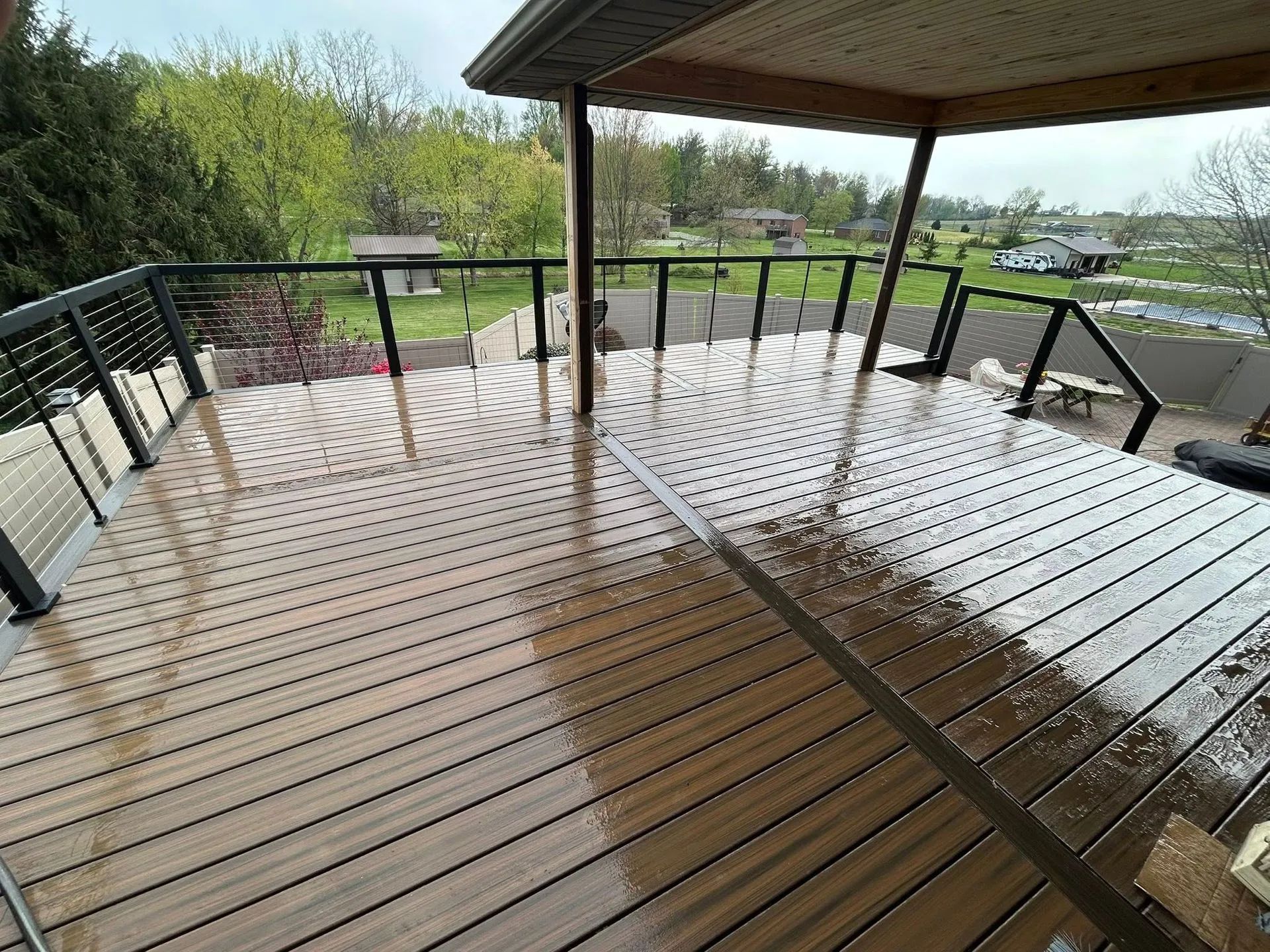
You picked composite so you wouldn't have to deal with this. No sanding, no re-staining every couple of summers, just a deck that looks good and stays that way. So it's frustrating when you walk out one afternoon and notice the boards near the grill look a shade lighter than the rest, or there's a dark blotch under where a planter sat all spring, or the whole deck just looks duller than it did when it went in. You start wondering if you bought the wrong material, or if something's actually gone wrong with it.
Here's the thing worth knowing before you assume the worst: composite decking is not one uniform product. There's a real range between a bargain board from fifteen years ago and a good capped composite board installed today, and there's a real difference between color change that's expected and staining that means something's actually wrong. Once you know which is which, you can tell whether your deck is doing exactly what it's supposed to, or whether it's time to have someone look at it.
Why Regional Conditions in Evansville Shape These Decisions
Bench Framing and Load Distribution
A built-in bench carries repeated concentrated load, meaning the same spots take weight every time someone sits down. A properly framed bench integrates its support posts directly into the deck's rim joist or blocking system rather than relying on the decking surface for structural transfer. In most residential applications, bench supports are notched and bolted through doubled rim joists using structural lag screws at a minimum of 3 inches of penetration into solid framing members.
Skipping this integration and fastening bench supports only to decking boards creates a lever effect. The boards flex under load, the fasteners work loose over two to three seasons, and the bench develops lateral movement that tightens every time someone stands up awkwardly and loosens again under normal sitting weight. By year five, the connection is compromised and the bench reads as unsafe even if it has not yet failed.
WARNING: If you notice discoloration or soft spots in the decking boards directly beneath a built-in bench, particularly near the ledger end of the deck, do not treat this as surface weathering. Soft spots under a bench shadow zone indicate moisture retention and potential frame decay that requires immediate inspection of the framing members below the surface.
Built-in planter boxes introduce a moisture management problem that most people do not anticipate. Soil holds water, and water held against a wood framing member without a proper drainage plane will begin to degrade the structural material within two growing seasons.
A correctly built deck planter uses a liner system that separates the soil from the wood entirely. HDPE liners or sheet metal pans are sloped to a drain point, and the drain is directed away from the deck frame through a dedicated weep port. The framing surrounding the planter is built from pressure-treated lumber rated for ground contact, typically UC4A or UC4B depending on soil moisture exposure, even if the rest of the deck uses a lighter treatment rating. Without this distinction in material specification, the planter box becomes the fastest-degrading element on the entire structure.
Planter Box Drainage and Moisture Management
Tip: When you assess winter deck damage, look at both the boards and the fasteners, and note the deck's overall condition. Popped nails can often be addressed (and are a good moment to consider switching to screws, which hold better against seasonal movement); split or badly cracked boards may need repair or replacement. Also check whether the deck is sealed/finished or bare and weathered, an unprotected deck absorbs more moisture and suffers more freeze-thaw damage, so how well it's protected tells you a lot about why it's deteriorating and what will help.
Why Composite Decking Changes Color at All
Every composite board goes through a settling period. The pigments and the polymer shell react to sunlight and heat for the first few months after installation, and the color shifts slightly, usually getting a little lighter or a little more muted than the box sample looked. Manufacturers build this into how they describe their products because it happens across the board, regardless of brand. Once that initial adjustment is done, a quality composite board levels off and holds close to that settled color for a long time.
What it doesn't do, if it's a well-made board, is keep fading year after year. UV light breaks down color pigment in any outdoor material. But composite decking is built specifically to resist that breakdown far longer than wood or paint does. A board that keeps visibly lightening season after season, especially unevenly, with the sun-facing side clearly paler than the shaded side, is telling you something about the quality of the material, not just doing what composite does.
Why Regional Conditions in Evansville Shape These Decisions
Bench Framing and Load Distribution
A built-in bench carries repeated concentrated load, meaning the same spots take weight every time someone sits down. A properly framed bench integrates its support posts directly into the deck's rim joist or blocking system rather than relying on the decking surface for structural transfer. In most residential applications, bench supports are notched and bolted through doubled rim joists using structural lag screws at a minimum of 3 inches of penetration into solid framing members.
Skipping this integration and fastening bench supports only to decking boards creates a lever effect. The boards flex under load, the fasteners work loose over two to three seasons, and the bench develops lateral movement that tightens every time someone stands up awkwardly and loosens again under normal sitting weight. By year five, the connection is compromised and the bench reads as unsafe even if it has not yet failed.
WARNING: If you notice discoloration or soft spots in the decking boards directly beneath a built-in bench, particularly near the ledger end of the deck, do not treat this as surface weathering. Soft spots under a bench shadow zone indicate moisture retention and potential frame decay that requires immediate inspection of the framing members below the surface.
Built-in planter boxes introduce a moisture management problem that most people do not anticipate. Soil holds water, and water held against a wood framing member without a proper drainage plane will begin to degrade the structural material within two growing seasons.
A correctly built deck planter uses a liner system that separates the soil from the wood entirely. HDPE liners or sheet metal pans are sloped to a drain point, and the drain is directed away from the deck frame through a dedicated weep port. The framing surrounding the planter is built from pressure-treated lumber rated for ground contact, typically UC4A or UC4B depending on soil moisture exposure, even if the rest of the deck uses a lighter treatment rating. Without this distinction in material specification, the planter box becomes the fastest-degrading element on the entire structure.
Planter Box Drainage and Moisture Management
Tip: When you assess winter deck damage, look at both the boards and the fasteners, and note the deck's overall condition. Popped nails can often be addressed (and are a good moment to consider switching to screws, which hold better against seasonal movement); split or badly cracked boards may need repair or replacement. Also check whether the deck is sealed/finished or bare and weathered, an unprotected deck absorbs more moisture and suffers more freeze-thaw damage, so how well it's protected tells you a lot about why it's deteriorating and what will help.
Capped vs. Uncapped: The Difference That Actually Matters
If you're trying to understand why one composite deck looks the same after ten summers and another looks chalky and blotchy after three, this is usually why. Composite boards are either capped or uncapped, and it changes almost everything about how the board ages.
Uncapped composite is made from wood fiber and plastic blended all the way through the board, with nothing protecting the surface. That wood content sits right at the surface, which means it can absorb moisture, take on tannin and organic staining more easily, and fade faster under direct sun since there's no protective shell shielding the pigment. Older composite decking, especially boards installed in the early wave of composite's popularity, was often this uncapped type, and a lot of the bad reputation composite picked up over the years traces straight back to it.
Capped composite has a polymer shell wrapped around that wood-plastic core, usually on all four sides in the better products. That cap is what actually faces the sun, the rain, and everything that lands on your deck, and it's engineered for UV resistance and stain resistance in a way the wood-plastic core underneath isn't. Capped boards shed moisture instead of absorbing it, resist staining because there's no exposed wood fiber to grab onto, and hold their color because the pigment is protected rather than sitting exposed. This is the single biggest factor in whether a composite deck still looks good a decade in.
Why Regional Conditions in Evansville Shape These Decisions
Bench Framing and Load Distribution
A built-in bench carries repeated concentrated load, meaning the same spots take weight every time someone sits down. A properly framed bench integrates its support posts directly into the deck's rim joist or blocking system rather than relying on the decking surface for structural transfer. In most residential applications, bench supports are notched and bolted through doubled rim joists using structural lag screws at a minimum of 3 inches of penetration into solid framing members.
Skipping this integration and fastening bench supports only to decking boards creates a lever effect. The boards flex under load, the fasteners work loose over two to three seasons, and the bench develops lateral movement that tightens every time someone stands up awkwardly and loosens again under normal sitting weight. By year five, the connection is compromised and the bench reads as unsafe even if it has not yet failed.
WARNING: If you notice discoloration or soft spots in the decking boards directly beneath a built-in bench, particularly near the ledger end of the deck, do not treat this as surface weathering. Soft spots under a bench shadow zone indicate moisture retention and potential frame decay that requires immediate inspection of the framing members below the surface.
Built-in planter boxes introduce a moisture management problem that most people do not anticipate. Soil holds water, and water held against a wood framing member without a proper drainage plane will begin to degrade the structural material within two growing seasons.
A correctly built deck planter uses a liner system that separates the soil from the wood entirely. HDPE liners or sheet metal pans are sloped to a drain point, and the drain is directed away from the deck frame through a dedicated weep port. The framing surrounding the planter is built from pressure-treated lumber rated for ground contact, typically UC4A or UC4B depending on soil moisture exposure, even if the rest of the deck uses a lighter treatment rating. Without this distinction in material specification, the planter box becomes the fastest-degrading element on the entire structure.
Planter Box Drainage and Moisture Management
What Actually Causes Staining on a Composite Deck
Fading is one issue. Staining is a different one, and it has a handful of usual suspects.
Organic debris is the most common culprit around here. Wet leaves, seed pods, and mulch left sitting on a board can leach tannins into the surface, especially on lighter-colored boards where the contrast shows up fast. Southern Indiana's humid stretches make this worse, because damp organic matter sitting on a board for days does more damage than the same debris in a dry climate that dries out overnight.
Hard water is another one, particularly if you've got sprinklers that hit the deck or planters that drip. Mineral-heavy water leaves behind a chalky residue as it evaporates, and if it happens in the same spot over and over, that residue builds into a visible pale ring or blotch.
Rust shows up wherever metal sits directly on the boards, patio furniture feet, grill stands, even certain fasteners, and it leaves an orange-brown stain that's noticeably different from tannin or mineral staining. Mold and mildew are their own category, and they thrive in shaded, humid spots on a deck that doesn't get much airflow or direct sun, which describes a lot of covered porch and pergola-shaded deck sections through an Evansville summer.
Tip: Rinse off leaves, seed pods, and other organic debris every week or two during the fall and spring, and give the deck a plain soap-and-water scrub a couple of times a year, especially shaded spots that don't dry out fast. Catching organic debris and moisture before they sit for days is the single easiest way to keep tannin staining and mildew from ever taking hold.
Why Regional Conditions in Evansville Shape These Decisions
Bench Framing and Load Distribution
A built-in bench carries repeated concentrated load, meaning the same spots take weight every time someone sits down. A properly framed bench integrates its support posts directly into the deck's rim joist or blocking system rather than relying on the decking surface for structural transfer. In most residential applications, bench supports are notched and bolted through doubled rim joists using structural lag screws at a minimum of 3 inches of penetration into solid framing members.
Skipping this integration and fastening bench supports only to decking boards creates a lever effect. The boards flex under load, the fasteners work loose over two to three seasons, and the bench develops lateral movement that tightens every time someone stands up awkwardly and loosens again under normal sitting weight. By year five, the connection is compromised and the bench reads as unsafe even if it has not yet failed.
WARNING: If you notice discoloration or soft spots in the decking boards directly beneath a built-in bench, particularly near the ledger end of the deck, do not treat this as surface weathering. Soft spots under a bench shadow zone indicate moisture retention and potential frame decay that requires immediate inspection of the framing members below the surface.
Built-in planter boxes introduce a moisture management problem that most people do not anticipate. Soil holds water, and water held against a wood framing member without a proper drainage plane will begin to degrade the structural material within two growing seasons.
A correctly built deck planter uses a liner system that separates the soil from the wood entirely. HDPE liners or sheet metal pans are sloped to a drain point, and the drain is directed away from the deck frame through a dedicated weep port. The framing surrounding the planter is built from pressure-treated lumber rated for ground contact, typically UC4A or UC4B depending on soil moisture exposure, even if the rest of the deck uses a lighter treatment rating. Without this distinction in material specification, the planter box becomes the fastest-degrading element on the entire structure.
Planter Box Drainage and Moisture Management
Cleanable Stain vs. Permanent Discoloration
This is the distinction that matters most when you're standing on your deck trying to decide whether to worry. Most of what shows up is surface staining. It's sitting on top of the cap, not in it, and it comes off with the right approach. Tannin marks, mineral deposits, light mold, and most grease spots fall into this category. A composite-safe cleaner and a soft brush, or in some cases a gentle rinse with a pressure washer set wide and kept moving, will lift most of this without touching the board underneath.
Permanent discoloration is different, and it usually means the cap itself has been affected, not just what's sitting on it. This happens from a few specific things: pressure washing too close or on too high a setting, which etches the surface of the cap; harsh chemicals like bleach or acidic cleaners that aren't rated for composite, which can strip color right out of the shell; or, on older uncapped boards, staining that's soaked past the surface into the wood fiber core, where no amount of surface cleaning reaches it. If you've scrubbed a spot with an appropriate cleaner and it hasn't budged at all, that's usually the sign you're dealing with the cap itself rather than something sitting on it.
Why Regional Conditions in Evansville Shape These Decisions
Bench Framing and Load Distribution
A built-in bench carries repeated concentrated load, meaning the same spots take weight every time someone sits down. A properly framed bench integrates its support posts directly into the deck's rim joist or blocking system rather than relying on the decking surface for structural transfer. In most residential applications, bench supports are notched and bolted through doubled rim joists using structural lag screws at a minimum of 3 inches of penetration into solid framing members.
Skipping this integration and fastening bench supports only to decking boards creates a lever effect. The boards flex under load, the fasteners work loose over two to three seasons, and the bench develops lateral movement that tightens every time someone stands up awkwardly and loosens again under normal sitting weight. By year five, the connection is compromised and the bench reads as unsafe even if it has not yet failed.
WARNING: If you notice discoloration or soft spots in the decking boards directly beneath a built-in bench, particularly near the ledger end of the deck, do not treat this as surface weathering. Soft spots under a bench shadow zone indicate moisture retention and potential frame decay that requires immediate inspection of the framing members below the surface.
Built-in planter boxes introduce a moisture management problem that most people do not anticipate. Soil holds water, and water held against a wood framing member without a proper drainage plane will begin to degrade the structural material within two growing seasons.
A correctly built deck planter uses a liner system that separates the soil from the wood entirely. HDPE liners or sheet metal pans are sloped to a drain point, and the drain is directed away from the deck frame through a dedicated weep port. The framing surrounding the planter is built from pressure-treated lumber rated for ground contact, typically UC4A or UC4B depending on soil moisture exposure, even if the rest of the deck uses a lighter treatment rating. Without this distinction in material specification, the planter box becomes the fastest-degrading element on the entire structure.
Planter Box Drainage and Moisture Management
Why Some Composite Decks Hold Up Better Than Others
Not all composite is built the same. Cheap composite is cheap for a reason, and the gap between a good board and a mediocre one only shows up over time, which is exactly when it's hardest to fix. Board generation matters a lot. Composite decking has gone through real improvements over the last couple of decades, and a board manufactured today with modern cap technology is a different product from what was on the market when composite first became popular, even if they're sold under similar-sounding names. Cap quality within the capped category varies too, some caps are thicker, more UV-stabilized, and more scratch-resistant than others, which affects how well they resist both fading and the kind of surface wear that lets staining take hold.
Color choice plays a role as well. Lighter boards show tannin and organic staining more visibly, since the contrast is sharper, while darker boards tend to show mineral and hard water spots more and run hotter underfoot in direct summer sun. Board manufacturers with strong fade and stain warranties, often 25 years or more on their capped lines, are backing that claim with real engineering, and that's worth paying attention to when you're comparing options for a new build.
Warning: Don't reach for a pressure washer on a high setting held close to the boards, and don't use bleach, ammonia-based cleaners, or anything acidic on composite decking unless the manufacturer specifically says it's safe. Both of these are the leading causes of true, unfixable discoloration on composite decks, damage that a wood deck would never show but that permanently marks a composite cap. If a stain hasn't come out with a composite-safe cleaner and gentle scrubbing, stop before reaching for something stronger and get advice first.
Why Regional Conditions in Evansville Shape These Decisions
Bench Framing and Load Distribution
A built-in bench carries repeated concentrated load, meaning the same spots take weight every time someone sits down. A properly framed bench integrates its support posts directly into the deck's rim joist or blocking system rather than relying on the decking surface for structural transfer. In most residential applications, bench supports are notched and bolted through doubled rim joists using structural lag screws at a minimum of 3 inches of penetration into solid framing members.
Skipping this integration and fastening bench supports only to decking boards creates a lever effect. The boards flex under load, the fasteners work loose over two to three seasons, and the bench develops lateral movement that tightens every time someone stands up awkwardly and loosens again under normal sitting weight. By year five, the connection is compromised and the bench reads as unsafe even if it has not yet failed.
WARNING: If you notice discoloration or soft spots in the decking boards directly beneath a built-in bench, particularly near the ledger end of the deck, do not treat this as surface weathering. Soft spots under a bench shadow zone indicate moisture retention and potential frame decay that requires immediate inspection of the framing members below the surface.
Built-in planter boxes introduce a moisture management problem that most people do not anticipate. Soil holds water, and water held against a wood framing member without a proper drainage plane will begin to degrade the structural material within two growing seasons.
A correctly built deck planter uses a liner system that separates the soil from the wood entirely. HDPE liners or sheet metal pans are sloped to a drain point, and the drain is directed away from the deck frame through a dedicated weep port. The framing surrounding the planter is built from pressure-treated lumber rated for ground contact, typically UC4A or UC4B depending on soil moisture exposure, even if the rest of the deck uses a lighter treatment rating. Without this distinction in material specification, the planter box becomes the fastest-degrading element on the entire structure.
Planter Box Drainage and Moisture Management
Keeping a Composite Deck Looking Its Best Through Southern Indiana Seasons
Composite decking was never marketed as zero-maintenance, just lower-maintenance, and the difference matters. A quick sweep to clear debris, a rinse after pollen season, and a soap-and-water wash before summer and again before the deck gets covered in fall leaves will handle most of what causes staining before it ever sets in. Keeping planters and furniture on pads rather than sitting flush on the boards cuts down on both moisture traps and rust marks. And in shaded, humid corners of the deck, whether that's under a pergola or against the house, a little extra attention to airflow and drying time goes a long way toward keeping mildew from getting a foothold.
If your deck is showing fading that looks uneven or is getting worse year after year, or staining that hasn't responded to a proper cleaning, it's worth having someone take a look rather than assuming it's just what composite does. Sometimes it's a lower-grade or older uncapped board reaching the end of what it can handle. Sometimes it's a maintenance habit, like a pressure washer used too aggressively, that's done damage that won't reverse itself. Either way, knowing the difference tells you whether you're looking at normal wear or a deck that deserves a closer look.
Why Regional Conditions in Evansville Shape These Decisions
Bench Framing and Load Distribution
A built-in bench carries repeated concentrated load, meaning the same spots take weight every time someone sits down. A properly framed bench integrates its support posts directly into the deck's rim joist or blocking system rather than relying on the decking surface for structural transfer. In most residential applications, bench supports are notched and bolted through doubled rim joists using structural lag screws at a minimum of 3 inches of penetration into solid framing members.
Skipping this integration and fastening bench supports only to decking boards creates a lever effect. The boards flex under load, the fasteners work loose over two to three seasons, and the bench develops lateral movement that tightens every time someone stands up awkwardly and loosens again under normal sitting weight. By year five, the connection is compromised and the bench reads as unsafe even if it has not yet failed.
WARNING: If you notice discoloration or soft spots in the decking boards directly beneath a built-in bench, particularly near the ledger end of the deck, do not treat this as surface weathering. Soft spots under a bench shadow zone indicate moisture retention and potential frame decay that requires immediate inspection of the framing members below the surface.
Built-in planter boxes introduce a moisture management problem that most people do not anticipate. Soil holds water, and water held against a wood framing member without a proper drainage plane will begin to degrade the structural material within two growing seasons.
A correctly built deck planter uses a liner system that separates the soil from the wood entirely. HDPE liners or sheet metal pans are sloped to a drain point, and the drain is directed away from the deck frame through a dedicated weep port. The framing surrounding the planter is built from pressure-treated lumber rated for ground contact, typically UC4A or UC4B depending on soil moisture exposure, even if the rest of the deck uses a lighter treatment rating. Without this distinction in material specification, the planter box becomes the fastest-degrading element on the entire structure.
Planter Box Drainage and Moisture Management
Frequently Asked Questions
Is it normal for a new composite deck to look lighter after a few months?
Yes. Composite boards often lighten slightly during their first months outdoors as sunlight and heat settle the color. Quality capped boards should then maintain their appearance consistently for many years.
Can I stain or reseal a composite deck the way I would a wood deck?
No. Composite decking does not absorb traditional stains or sealers like wood. Applying these products can create uneven finishes or discoloration, especially on capped boards designed with protective surfaces already.
Why does my deck fade unevenly, more in the sun than under the pergola?
Direct sunlight causes more color change than shaded conditions, so slight differences are normal. However, noticeably chalky or dramatically lighter sunny areas can indicate lower-quality boards or excessive surface weathering instead.
Will a composite deck stain from a wood or metal patio table?
Yes. Damp wooden furniture can transfer tannins, while metal legs may leave rust marks after prolonged moisture exposure. Furniture pads or coasters help protect composite boards and prevent visible staining.
How do I know if my composite decking is capped or uncapped?
Check the product name or manufacturer specifications first. Capped boards generally have a smoother protective shell and embossed texture, while uncapped composite often appears flatter, more uniform, and slightly porous overall.
Why Regional Conditions in Evansville Shape These Decisions
Bench Framing and Load Distribution
A built-in bench carries repeated concentrated load, meaning the same spots take weight every time someone sits down. A properly framed bench integrates its support posts directly into the deck's rim joist or blocking system rather than relying on the decking surface for structural transfer. In most residential applications, bench supports are notched and bolted through doubled rim joists using structural lag screws at a minimum of 3 inches of penetration into solid framing members.
Skipping this integration and fastening bench supports only to decking boards creates a lever effect. The boards flex under load, the fasteners work loose over two to three seasons, and the bench develops lateral movement that tightens every time someone stands up awkwardly and loosens again under normal sitting weight. By year five, the connection is compromised and the bench reads as unsafe even if it has not yet failed.
WARNING: If you notice discoloration or soft spots in the decking boards directly beneath a built-in bench, particularly near the ledger end of the deck, do not treat this as surface weathering. Soft spots under a bench shadow zone indicate moisture retention and potential frame decay that requires immediate inspection of the framing members below the surface.
Built-in planter boxes introduce a moisture management problem that most people do not anticipate. Soil holds water, and water held against a wood framing member without a proper drainage plane will begin to degrade the structural material within two growing seasons.
A correctly built deck planter uses a liner system that separates the soil from the wood entirely. HDPE liners or sheet metal pans are sloped to a drain point, and the drain is directed away from the deck frame through a dedicated weep port. The framing surrounding the planter is built from pressure-treated lumber rated for ground contact, typically UC4A or UC4B depending on soil moisture exposure, even if the rest of the deck uses a lighter treatment rating. Without this distinction in material specification, the planter box becomes the fastest-degrading element on the entire structure.
Planter Box Drainage and Moisture Management
Composite Decking That Stays Better Looking Longer
Composite decking performs best when the right board quality, installation methods, and routine care all work together. Castle Top Classic Outdoor Living brings 24 years of experience working with outdoor living spaces throughout Evansville, Indiana, including composite decks exposed to changing seasons, humidity, direct sunlight, and everyday use. Understanding whether fading comes from normal color settling, surface buildup, maintenance practices, or material quality makes it much easier to protect the deck and avoid unnecessary repairs or treatments.
A well-made capped composite deck should maintain a consistent appearance for years without the sanding, staining, and sealing required by traditional wood. Regular debris removal, gentle cleaning, proper furniture pads, and manufacturer-approved products help prevent many common stains while preserving the protective cap. When discoloration does appear, recognizing the difference between a removable surface stain and permanent material damage prevents aggressive cleaning from making matters worse. With sensible maintenance, quality composite decking can remain attractive, comfortable, and dependable through many Southern Indiana seasons.