Fence Leaning or Posts Heaving After a Freeze? Why the Footings Failed
Why Regional Conditions in Evansville Shape These Decisions
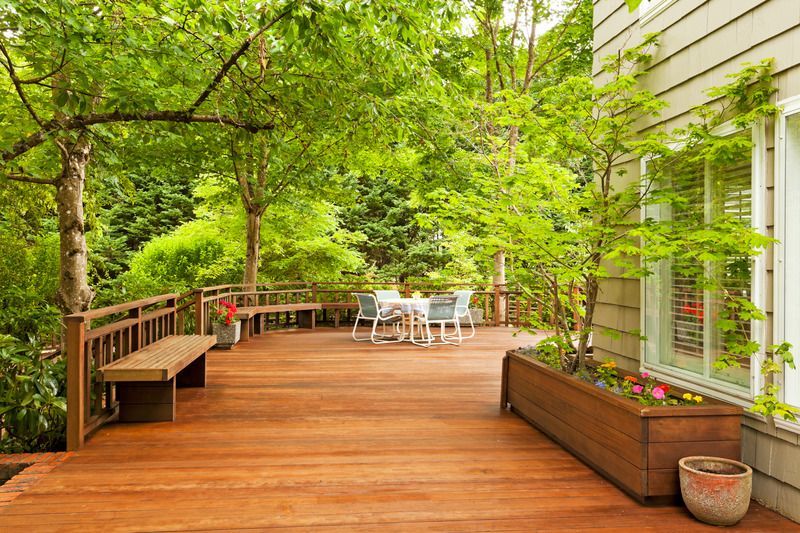
Bench Framing and Load Distribution
A built-in bench carries repeated concentrated load, meaning the same spots take weight every time someone sits down. A properly framed bench integrates its support posts directly into the deck's rim joist or blocking system rather than relying on the decking surface for structural transfer. In most residential applications, bench supports are notched and bolted through doubled rim joists using structural lag screws at a minimum of 3 inches of penetration into solid framing members.
Skipping this integration and fastening bench supports only to decking boards creates a lever effect. The boards flex under load, the fasteners work loose over two to three seasons, and the bench develops lateral movement that tightens every time someone stands up awkwardly and loosens again under normal sitting weight. By year five, the connection is compromised and the bench reads as unsafe even if it has not yet failed.
WARNING: If you notice discoloration or soft spots in the decking boards directly beneath a built-in bench, particularly near the ledger end of the deck, do not treat this as surface weathering. Soft spots under a bench shadow zone indicate moisture retention and potential frame decay that requires immediate inspection of the framing members below the surface.
Built-in planter boxes introduce a moisture management problem that most people do not anticipate. Soil holds water, and water held against a wood framing member without a proper drainage plane will begin to degrade the structural material within two growing seasons.
A correctly built deck planter uses a liner system that separates the soil from the wood entirely. HDPE liners or sheet metal pans are sloped to a drain point, and the drain is directed away from the deck frame through a dedicated weep port. The framing surrounding the planter is built from pressure-treated lumber rated for ground contact, typically UC4A or UC4B depending on soil moisture exposure, even if the rest of the deck uses a lighter treatment rating. Without this distinction in material specification, the planter box becomes the fastest-degrading element on the entire structure.
Planter Box Drainage and Moisture Management
Quick Answer: A fence post that heaves or leans after a hard freeze almost always comes down to a footing that never reached below the frost line, or one poured without proper drainage beneath it. As the ground freezes, moisture in the soil forms ice that expands and grips the sides of a shallow footing, lifting the post along with it, and when the thaw comes the post rarely settles back exactly where it started. Deeper, well-drained footings sit below the zone where that freeze-thaw cycle happens, so they stay anchored regardless of what the surface does above them. The fix isn't tightening hardware or resetting the post in the same hole; it's rebuilding the footing to the depth, diameter, and drainage the local frost conditions call for.
You walk the fence line in March after the ground finally thaws, and something that was plumb in October isn't anymore. One post along the side yard leans a couple of degrees toward the neighbor's driveway. The gate that used to swing shut on its own now catches on the latch post. A run of picket that stood arrow-straight all summer has picked up a visible wave near the corner. Nothing broke. No storm knocked it down. It just tilted, quietly, sometime between the season's first hard freeze and the thaw that followed.
That's frost heave, and it's one of the more common reasons a fence that was installed correctly by every visible measure starts failing a season or two later. It isn't about bad wood or a weak post. It's about what's happening several inches to a couple of feet underground, in a zone most homeowners never think about until a post starts moving on its own.
Why Regional Conditions in Evansville Shape These Decisions
Bench Framing and Load Distribution
A built-in bench carries repeated concentrated load, meaning the same spots take weight every time someone sits down. A properly framed bench integrates its support posts directly into the deck's rim joist or blocking system rather than relying on the decking surface for structural transfer. In most residential applications, bench supports are notched and bolted through doubled rim joists using structural lag screws at a minimum of 3 inches of penetration into solid framing members.
Skipping this integration and fastening bench supports only to decking boards creates a lever effect. The boards flex under load, the fasteners work loose over two to three seasons, and the bench develops lateral movement that tightens every time someone stands up awkwardly and loosens again under normal sitting weight. By year five, the connection is compromised and the bench reads as unsafe even if it has not yet failed.
WARNING: If you notice discoloration or soft spots in the decking boards directly beneath a built-in bench, particularly near the ledger end of the deck, do not treat this as surface weathering. Soft spots under a bench shadow zone indicate moisture retention and potential frame decay that requires immediate inspection of the framing members below the surface.
Built-in planter boxes introduce a moisture management problem that most people do not anticipate. Soil holds water, and water held against a wood framing member without a proper drainage plane will begin to degrade the structural material within two growing seasons.
A correctly built deck planter uses a liner system that separates the soil from the wood entirely. HDPE liners or sheet metal pans are sloped to a drain point, and the drain is directed away from the deck frame through a dedicated weep port. The framing surrounding the planter is built from pressure-treated lumber rated for ground contact, typically UC4A or UC4B depending on soil moisture exposure, even if the rest of the deck uses a lighter treatment rating. Without this distinction in material specification, the planter box becomes the fastest-degrading element on the entire structure.
Planter Box Drainage and Moisture Management
What's Actually Happening Underground When a Post Heaves
Frost heave starts with water in the soil, not with the post itself. As freezing temperatures work their way down from the surface, moisture near that freezing line starts forming ice. That ice doesn't just sit still. It pulls additional water up from the unfrozen soil below through capillary action, and as that water freezes onto the existing ice, it builds into a layer known as an ice lens. Ice lenses grow in the direction of heat loss, which means toward the surface, and as they grow they push everything above them upward: soil, sidewalks, and any post or footing sitting in that zone.
The part that catches most homeowners off guard is that the ice doesn't just push from below. As it forms, it can grip the sides of a footing directly, an effect called adhesion freezing. A concrete footing with rough or loosely disturbed soil packed against its sides gives that ice something to hold onto, and as the ice lens grows upward, it can drag the footing, and the post set in it, right along with it.
When the thaw comes, the story doesn't end cleanly. Soil that was frozen and swollen collapses back down as the ice melts, but it's now saturated and weaker than it was before the freeze, and the post doesn't necessarily settle back into the exact position it started from. Repeat that cycle a handful of times over a few winters, and a post that was dead plumb the day it went in ends up leaning, or standing proud of the ground it used to sit flush with.
Why Regional Conditions in Evansville Shape These Decisions
Bench Framing and Load Distribution
A built-in bench carries repeated concentrated load, meaning the same spots take weight every time someone sits down. A properly framed bench integrates its support posts directly into the deck's rim joist or blocking system rather than relying on the decking surface for structural transfer. In most residential applications, bench supports are notched and bolted through doubled rim joists using structural lag screws at a minimum of 3 inches of penetration into solid framing members.
Skipping this integration and fastening bench supports only to decking boards creates a lever effect. The boards flex under load, the fasteners work loose over two to three seasons, and the bench develops lateral movement that tightens every time someone stands up awkwardly and loosens again under normal sitting weight. By year five, the connection is compromised and the bench reads as unsafe even if it has not yet failed.
WARNING: If you notice discoloration or soft spots in the decking boards directly beneath a built-in bench, particularly near the ledger end of the deck, do not treat this as surface weathering. Soft spots under a bench shadow zone indicate moisture retention and potential frame decay that requires immediate inspection of the framing members below the surface.
Built-in planter boxes introduce a moisture management problem that most people do not anticipate. Soil holds water, and water held against a wood framing member without a proper drainage plane will begin to degrade the structural material within two growing seasons.
A correctly built deck planter uses a liner system that separates the soil from the wood entirely. HDPE liners or sheet metal pans are sloped to a drain point, and the drain is directed away from the deck frame through a dedicated weep port. The framing surrounding the planter is built from pressure-treated lumber rated for ground contact, typically UC4A or UC4B depending on soil moisture exposure, even if the rest of the deck uses a lighter treatment rating. Without this distinction in material specification, the planter box becomes the fastest-degrading element on the entire structure.
Planter Box Drainage and Moisture Management
Tip: When you assess winter deck damage, look at both the boards and the fasteners, and note the deck's overall condition. Popped nails can often be addressed (and are a good moment to consider switching to screws, which hold better against seasonal movement); split or badly cracked boards may need repair or replacement. Also check whether the deck is sealed/finished or bare and weathered, an unprotected deck absorbs more moisture and suffers more freeze-thaw damage, so how well it's protected tells you a lot about why it's deteriorating and what will help.
Why One Post Heaves and the Neighbor's Doesn't
Two fences fifty feet apart can go through the same winter with completely different results, and the reasons usually come down to a short list of variables.
Soil type. Frost heave needs fine-grained, moisture-holding soil to do its worst work. Heavier clay soil, common in a lot of yards around Evansville, holds water close to the surface and is far more prone to forming ice lenses than sandy or well-draining soil. A post set in a low spot where water collects after every rain is sitting in exactly the conditions frost heave needs.
Footing depth relative to the frost line. This is the single biggest factor. A footing set below the depth to which the ground actually freezes in a given winter sits in soil that never goes through the freeze-thaw cycle, so it has nothing to grip onto and nothing pushing it upward. A footing set even a few inches above that line is sitting right in the zone where all the movement happens.
How the hole was backfilled. A post set in loosely packed, disturbed soil, or a footing poured without a gravel base underneath it, holds more water right where it matters most. Water trapped against the base of a footing is water that's available to freeze, expand, and heave.
Load and position. Corner posts and gate posts carry more structural weight than a line post in the middle of a run, and they tend to show heave-related movement first because they're absorbing more force from the rest of the fence.
Material gets blamed more than it deserves.
Post material matters less than people expect. Swapping a wood post for a heavier or treated one doesn't change any of this. A steel post set too shallow heaves just as fast as a wood one set the same depth. Depth, drainage, and soil conditions determine whether a post holds. Not what it's made of.
Why Regional Conditions in Evansville Shape These Decisions
Bench Framing and Load Distribution
A built-in bench carries repeated concentrated load, meaning the same spots take weight every time someone sits down. A properly framed bench integrates its support posts directly into the deck's rim joist or blocking system rather than relying on the decking surface for structural transfer. In most residential applications, bench supports are notched and bolted through doubled rim joists using structural lag screws at a minimum of 3 inches of penetration into solid framing members.
Skipping this integration and fastening bench supports only to decking boards creates a lever effect. The boards flex under load, the fasteners work loose over two to three seasons, and the bench develops lateral movement that tightens every time someone stands up awkwardly and loosens again under normal sitting weight. By year five, the connection is compromised and the bench reads as unsafe even if it has not yet failed.
WARNING: If you notice discoloration or soft spots in the decking boards directly beneath a built-in bench, particularly near the ledger end of the deck, do not treat this as surface weathering. Soft spots under a bench shadow zone indicate moisture retention and potential frame decay that requires immediate inspection of the framing members below the surface.
Built-in planter boxes introduce a moisture management problem that most people do not anticipate. Soil holds water, and water held against a wood framing member without a proper drainage plane will begin to degrade the structural material within two growing seasons.
A correctly built deck planter uses a liner system that separates the soil from the wood entirely. HDPE liners or sheet metal pans are sloped to a drain point, and the drain is directed away from the deck frame through a dedicated weep port. The framing surrounding the planter is built from pressure-treated lumber rated for ground contact, typically UC4A or UC4B depending on soil moisture exposure, even if the rest of the deck uses a lighter treatment rating. Without this distinction in material specification, the planter box becomes the fastest-degrading element on the entire structure.
Planter Box Drainage and Moisture Management
The Footing Depth Southern Indiana Actually Calls For
Frost line depth isn't a national constant. It varies by region, and in Indiana it varies from one end of the state to the other. Northern Indiana sees deeper frost penetration, commonly in the 36-inch range in a typical winter. Down here in southern Indiana, around Evansville and Vanderburgh County, typical frost penetration runs shallower, generally in the 24- to 30-inch range, though a harder-than-usual cold stretch can push it deeper than that in a given year.
The guidance behind proper footing design calls for the bottom of a footing to sit a few inches below whatever the local frost line actually is, not right at it, since the frost line figure itself is a typical depth, not a guarantee for every winter. A footing that just reaches the frost line on paper has very little margin if a given stretch of January or February runs colder or longer than average.
Tip: If you're not sure how deep your existing fence posts were set, dig down next to the one post that's already heaved rather than guessing about the rest. Most posts along a fence line were set at a uniform, shallow depth across the whole run, so what you find at one heaved post usually tells you what's true for the others before they show it.
Why Regional Conditions in Evansville Shape These Decisions
Bench Framing and Load Distribution
A built-in bench carries repeated concentrated load, meaning the same spots take weight every time someone sits down. A properly framed bench integrates its support posts directly into the deck's rim joist or blocking system rather than relying on the decking surface for structural transfer. In most residential applications, bench supports are notched and bolted through doubled rim joists using structural lag screws at a minimum of 3 inches of penetration into solid framing members.
Skipping this integration and fastening bench supports only to decking boards creates a lever effect. The boards flex under load, the fasteners work loose over two to three seasons, and the bench develops lateral movement that tightens every time someone stands up awkwardly and loosens again under normal sitting weight. By year five, the connection is compromised and the bench reads as unsafe even if it has not yet failed.
WARNING: If you notice discoloration or soft spots in the decking boards directly beneath a built-in bench, particularly near the ledger end of the deck, do not treat this as surface weathering. Soft spots under a bench shadow zone indicate moisture retention and potential frame decay that requires immediate inspection of the framing members below the surface.
Built-in planter boxes introduce a moisture management problem that most people do not anticipate. Soil holds water, and water held against a wood framing member without a proper drainage plane will begin to degrade the structural material within two growing seasons.
A correctly built deck planter uses a liner system that separates the soil from the wood entirely. HDPE liners or sheet metal pans are sloped to a drain point, and the drain is directed away from the deck frame through a dedicated weep port. The framing surrounding the planter is built from pressure-treated lumber rated for ground contact, typically UC4A or UC4B depending on soil moisture exposure, even if the rest of the deck uses a lighter treatment rating. Without this distinction in material specification, the planter box becomes the fastest-degrading element on the entire structure.
Planter Box Drainage and Moisture Management
Tip: When you assess winter deck damage, look at both the boards and the fasteners, and note the deck's overall condition. Popped nails can often be addressed (and are a good moment to consider switching to screws, which hold better against seasonal movement); split or badly cracked boards may need repair or replacement. Also check whether the deck is sealed/finished or bare and weathered, an unprotected deck absorbs more moisture and suffers more freeze-thaw damage, so how well it's protected tells you a lot about why it's deteriorating and what will help.
Diameter and Shape Matter Almost as Much as Depth
Depth gets most of the attention, but a footing that's the right depth and the wrong shape can still move.
Diameter. A footing needs to be noticeably wider than the post itself, not just deep enough to reach past the frost line. A footing poured too narrow doesn't give the surrounding soil enough surface area to resist lateral wind loads or the upward pull of a freezing ice lens, so it stays more prone to shifting even when the depth is otherwise correct.
The bell-shaped base. Widening the bottom of the footing hole so it flares out below the narrower shaft above it is one of the more effective ways to resist frost heave specifically. A flared base means the soil directly above that wider section has to compress or move for the footing to lift, which resists the upward pull of an ice lens far better than a footing with straight, parallel sides all the way down.
A gravel base underneath. A layer of gravel at the bottom of the hole, below where the concrete goes, gives water somewhere to drain instead of pooling directly under the footing. Water trapped under a footing with nowhere to go sits there through the winter, ready to freeze and heave. Skipping this step is one of the more common shortcuts that shows up as a leaning post two or three winters later, even when the depth was otherwise correct.
Why Regional Conditions in Evansville Shape These Decisions
Bench Framing and Load Distribution
A built-in bench carries repeated concentrated load, meaning the same spots take weight every time someone sits down. A properly framed bench integrates its support posts directly into the deck's rim joist or blocking system rather than relying on the decking surface for structural transfer. In most residential applications, bench supports are notched and bolted through doubled rim joists using structural lag screws at a minimum of 3 inches of penetration into solid framing members.
Skipping this integration and fastening bench supports only to decking boards creates a lever effect. The boards flex under load, the fasteners work loose over two to three seasons, and the bench develops lateral movement that tightens every time someone stands up awkwardly and loosens again under normal sitting weight. By year five, the connection is compromised and the bench reads as unsafe even if it has not yet failed.
WARNING: If you notice discoloration or soft spots in the decking boards directly beneath a built-in bench, particularly near the ledger end of the deck, do not treat this as surface weathering. Soft spots under a bench shadow zone indicate moisture retention and potential frame decay that requires immediate inspection of the framing members below the surface.
Built-in planter boxes introduce a moisture management problem that most people do not anticipate. Soil holds water, and water held against a wood framing member without a proper drainage plane will begin to degrade the structural material within two growing seasons.
A correctly built deck planter uses a liner system that separates the soil from the wood entirely. HDPE liners or sheet metal pans are sloped to a drain point, and the drain is directed away from the deck frame through a dedicated weep port. The framing surrounding the planter is built from pressure-treated lumber rated for ground contact, typically UC4A or UC4B depending on soil moisture exposure, even if the rest of the deck uses a lighter treatment rating. Without this distinction in material specification, the planter box becomes the fastest-degrading element on the entire structure.
Planter Box Drainage and Moisture Management
Telling a Heaved Footing Apart from Rot or Settling
Not every leaning post is a frost heave problem, and it's worth knowing the difference before assuming the fix.
A post affected by frost heave usually shows movement that tracks with the season: worse right after a hard freeze-thaw stretch, sometimes appearing to hold steady through a mild winter, and it often lifts the post slightly out of the ground rather than just tilting it in place. Multiple posts along the same run, especially ones set at the same time in similar soil, tend to move together or in a similar pattern once one of them starts.
Rot at the base of a wood post looks and behaves differently. Instead of lifting, a rotted post tends to wobble or give at ground level, the wood itself is visibly soft or crumbling right where it meets the soil, and the problem is usually isolated to older or untreated posts rather than showing up evenly across a fence line installed at the same time. Settling, by contrast, tends to be a one-time, gradual sink rather than a seasonal push-and-pull, usually tracing back to a footing that was loaded before the concrete fully cured, or ground that was disturbed and never properly compacted during installation.
Why Regional Conditions in Evansville Shape These Decisions
Bench Framing and Load Distribution
A built-in bench carries repeated concentrated load, meaning the same spots take weight every time someone sits down. A properly framed bench integrates its support posts directly into the deck's rim joist or blocking system rather than relying on the decking surface for structural transfer. In most residential applications, bench supports are notched and bolted through doubled rim joists using structural lag screws at a minimum of 3 inches of penetration into solid framing members.
Skipping this integration and fastening bench supports only to decking boards creates a lever effect. The boards flex under load, the fasteners work loose over two to three seasons, and the bench develops lateral movement that tightens every time someone stands up awkwardly and loosens again under normal sitting weight. By year five, the connection is compromised and the bench reads as unsafe even if it has not yet failed.
WARNING: If you notice discoloration or soft spots in the decking boards directly beneath a built-in bench, particularly near the ledger end of the deck, do not treat this as surface weathering. Soft spots under a bench shadow zone indicate moisture retention and potential frame decay that requires immediate inspection of the framing members below the surface.
Built-in planter boxes introduce a moisture management problem that most people do not anticipate. Soil holds water, and water held against a wood framing member without a proper drainage plane will begin to degrade the structural material within two growing seasons.
A correctly built deck planter uses a liner system that separates the soil from the wood entirely. HDPE liners or sheet metal pans are sloped to a drain point, and the drain is directed away from the deck frame through a dedicated weep port. The framing surrounding the planter is built from pressure-treated lumber rated for ground contact, typically UC4A or UC4B depending on soil moisture exposure, even if the rest of the deck uses a lighter treatment rating. Without this distinction in material specification, the planter box becomes the fastest-degrading element on the entire structure.
Planter Box Drainage and Moisture Management
What Fixing a Heaved Footing Actually Involves
Resetting a heaved post in the same hole it heaved out of, without changing anything about the footing underneath it, tends to buy a season or two at most before the same movement starts again. The soil conditions and footing depth that caused the problem the first time are still sitting right there under the post.
A proper repair means removing the old footing, digging past it to reach the correct depth for the local frost line, and rebuilding it with a gravel base, adequate diameter, and a flared or bell-shaped bottom where soil conditions call for it. The post gets reset plumb, braced while the new concrete cures fully, and backfilled with material that won't hold water against the footing the way the original installation may have.
Warning: Don't try to fix a heaved post by pouring fresh concrete directly on top of or around the existing shallow footing. Stacking new concrete on a footing that's already too shallow doesn't add depth where it actually matters, and it can trap even more moisture against the post base than before, making the next freeze-thaw cycle worse instead of better.
Why Regional Conditions in Evansville Shape These Decisions
Bench Framing and Load Distribution
A built-in bench carries repeated concentrated load, meaning the same spots take weight every time someone sits down. A properly framed bench integrates its support posts directly into the deck's rim joist or blocking system rather than relying on the decking surface for structural transfer. In most residential applications, bench supports are notched and bolted through doubled rim joists using structural lag screws at a minimum of 3 inches of penetration into solid framing members.
Skipping this integration and fastening bench supports only to decking boards creates a lever effect. The boards flex under load, the fasteners work loose over two to three seasons, and the bench develops lateral movement that tightens every time someone stands up awkwardly and loosens again under normal sitting weight. By year five, the connection is compromised and the bench reads as unsafe even if it has not yet failed.
WARNING: If you notice discoloration or soft spots in the decking boards directly beneath a built-in bench, particularly near the ledger end of the deck, do not treat this as surface weathering. Soft spots under a bench shadow zone indicate moisture retention and potential frame decay that requires immediate inspection of the framing members below the surface.
Built-in planter boxes introduce a moisture management problem that most people do not anticipate. Soil holds water, and water held against a wood framing member without a proper drainage plane will begin to degrade the structural material within two growing seasons.
A correctly built deck planter uses a liner system that separates the soil from the wood entirely. HDPE liners or sheet metal pans are sloped to a drain point, and the drain is directed away from the deck frame through a dedicated weep port. The framing surrounding the planter is built from pressure-treated lumber rated for ground contact, typically UC4A or UC4B depending on soil moisture exposure, even if the rest of the deck uses a lighter treatment rating. Without this distinction in material specification, the planter box becomes the fastest-degrading element on the entire structure.
Planter Box Drainage and Moisture Management
Getting a Fence Line That Stops Repeating the Problem
A fence that heaved once in a hard winter is telling you something about how the footings were built the first time, not just about the weather. Southern Indiana gets enough freeze-thaw cycling in a typical winter that a footing set to a generic, shallow depth is working against the odds from the start. Once one post starts heaving, the posts on either side of it are usually sitting in the same soil and depth conditions, even if they haven't visibly moved yet..
Why Regional Conditions in Evansville Shape These Decisions
Bench Framing and Load Distribution
A built-in bench carries repeated concentrated load, meaning the same spots take weight every time someone sits down. A properly framed bench integrates its support posts directly into the deck's rim joist or blocking system rather than relying on the decking surface for structural transfer. In most residential applications, bench supports are notched and bolted through doubled rim joists using structural lag screws at a minimum of 3 inches of penetration into solid framing members.
Skipping this integration and fastening bench supports only to decking boards creates a lever effect. The boards flex under load, the fasteners work loose over two to three seasons, and the bench develops lateral movement that tightens every time someone stands up awkwardly and loosens again under normal sitting weight. By year five, the connection is compromised and the bench reads as unsafe even if it has not yet failed.
WARNING: If you notice discoloration or soft spots in the decking boards directly beneath a built-in bench, particularly near the ledger end of the deck, do not treat this as surface weathering. Soft spots under a bench shadow zone indicate moisture retention and potential frame decay that requires immediate inspection of the framing members below the surface.
Built-in planter boxes introduce a moisture management problem that most people do not anticipate. Soil holds water, and water held against a wood framing member without a proper drainage plane will begin to degrade the structural material within two growing seasons.
A correctly built deck planter uses a liner system that separates the soil from the wood entirely. HDPE liners or sheet metal pans are sloped to a drain point, and the drain is directed away from the deck frame through a dedicated weep port. The framing surrounding the planter is built from pressure-treated lumber rated for ground contact, typically UC4A or UC4B depending on soil moisture exposure, even if the rest of the deck uses a lighter treatment rating. Without this distinction in material specification, the planter box becomes the fastest-degrading element on the entire structure.
Planter Box Drainage and Moisture Management
Frequently Asked Questions
Will a heaved fence post go back to normal on its own after it thaws?
Not usually. Some minor settling happens as the ground thaws, but a post that's been pushed up or tilted rarely returns to its original position and depth on its own. The soil around it has been disturbed and weakened by the freeze-thaw cycle, and the footing that allowed the movement in the first place is still sitting above the frost line, so the same thing tends to happen again the next winter.
How can I tell if my fence posts were set deep enough when they were installed?
The most reliable way is to dig down along the one post that's already showing movement and measure how deep the footing actually goes. If it stops well short of 24 to 30 inches in this area, that's likely shallower than what southern Indiana's frost conditions call for. A post that hasn't moved yet but was installed at the same shallow depth as ones that have is usually just further behind in the same process.
Does a taller privacy fence need deeper footings than a shorter picket fence?
Yes, generally. Taller fence sections carry more wind load and put more lateral force on each post, which means the footing needs to be sized for that load in addition to sitting below the frost line. A gate post or corner post on a tall privacy fence in particular needs a footing built for both the structural load and the local frost depth, not just whichever happens to be deeper.
Can I just add more concrete around a leaning post instead of digging it all back out?
Pouring additional concrete around an already-heaved post rarely solves the underlying issue, since the original footing is still sitting above the frost line and the soil conditions that caused the movement haven't changed. It can also trap more moisture against the post than before. A footing that's already failed from frost heave generally needs to come out and be rebuilt at the correct depth rather than reinforced in place.
Why did my fence only start heaving a few years after it was installed, not the first winter?
Frost heave damage is cumulative. A footing set a little shallow might get through a mild winter with no visible movement, but each freeze-thaw cycle disturbs the soil around it slightly more and loosens its grip a little further. A few winters of average or slightly below-average cold can eventually add up to a lean that wasn't there the first year, especially once the surrounding soil has been loosened by repeated cycles.
Do vinyl or metal fence posts heave the same way wood posts do?
Yes. Frost heave acts on the footing and the depth it's set at, not on the material of the post itself. A vinyl or aluminum post set in a footing that sits above the local frost line is just as likely to heave as a wood post set the same way, since the force comes from the ground movement below, not from anything specific to what the post above ground is made of.
Why Regional Conditions in Evansville Shape These Decisions
Bench Framing and Load Distribution
A built-in bench carries repeated concentrated load, meaning the same spots take weight every time someone sits down. A properly framed bench integrates its support posts directly into the deck's rim joist or blocking system rather than relying on the decking surface for structural transfer. In most residential applications, bench supports are notched and bolted through doubled rim joists using structural lag screws at a minimum of 3 inches of penetration into solid framing members.
Skipping this integration and fastening bench supports only to decking boards creates a lever effect. The boards flex under load, the fasteners work loose over two to three seasons, and the bench develops lateral movement that tightens every time someone stands up awkwardly and loosens again under normal sitting weight. By year five, the connection is compromised and the bench reads as unsafe even if it has not yet failed.
WARNING: If you notice discoloration or soft spots in the decking boards directly beneath a built-in bench, particularly near the ledger end of the deck, do not treat this as surface weathering. Soft spots under a bench shadow zone indicate moisture retention and potential frame decay that requires immediate inspection of the framing members below the surface.
Built-in planter boxes introduce a moisture management problem that most people do not anticipate. Soil holds water, and water held against a wood framing member without a proper drainage plane will begin to degrade the structural material within two growing seasons.
A correctly built deck planter uses a liner system that separates the soil from the wood entirely. HDPE liners or sheet metal pans are sloped to a drain point, and the drain is directed away from the deck frame through a dedicated weep port. The framing surrounding the planter is built from pressure-treated lumber rated for ground contact, typically UC4A or UC4B depending on soil moisture exposure, even if the rest of the deck uses a lighter treatment rating. Without this distinction in material specification, the planter box becomes the fastest-degrading element on the entire structure.
Planter Box Drainage and Moisture Management
Building Fence Footings That Outlast Southern Indiana Winters
A fence post that leans or lifts after a hard freeze is rarely a sign of bad luck or poor lumber. It points back to what sits underground: a footing that stopped short of the frost line, a hole with no gravel base, or soil that held water right against the concrete. Once those conditions are understood, the pattern stops feeling random. Depth, diameter, and drainage decide whether a post holds its ground through the coldest stretch of the season.
Castle Top Classic Outdoor Living
has spent 24
years
building and repairing fences
in Evansville, IN, and that time has shown how much a winter here can test a footing that was set too shallow. The posts that stay plumb year after year share the same traits: they reach below the frost line, sit on a draining gravel base, and flare wide enough at the bottom to resist the pull of ice. Those details quietly carry a fence through every season.